Santaclous: A Sweet Handwritten Font for Crafters & Sellers
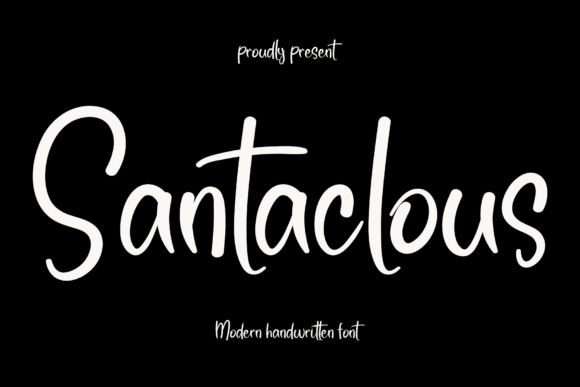
As someone who designs printable wedding suites, hand-paints boutique tags, and cuts vinyl for seasonal mugs and tote bags, I know how much a font can shape the feeling—and sales—of a product. Santaclous isn’t just another script font. It’s warm, approachable, and full of quiet charm—the kind that makes customers pause mid-scroll on Etsy or linger at your farmers’ market booth. Its soft curves, gentle slant, and consistent baseline give it real readability without sacrificing personality. That balance is rare in handwritten fonts, especially ones built for commercial craft use.
I’ve used Santaclous across dozens of physical and digital products—and each time, it delivers both visual appeal and production reliability. On candle labels? It reads clearly at 12 pt with crisp edges for laser printing and clean cut lines in Cricut Design Space. On wedding welcome boards or farmhouse-style wall art? Its friendly rhythm invites warmth without looking childish or overly cutesy. And for holiday packaging—think kraft boxes tied with twine or gift tags stamped with gold foil—it adds just enough whimsy to stand out on a crowded shelf.
What makes Santaclous especially practical for makers is its thoughtful construction. Unlike some decorative scripts that collapse at small sizes or lose legibility when scaled down, Santaclous holds up beautifully on ¾” sticker dots, 1.5” product tags, and even 8 pt printed text on delicate vellum invitations. The letterforms have generous spacing and open counters—critical when cutting vinyl or generating SVG files for Silhouette Studio. No awkward overlaps, no tangled swashes that misfire on the mat. Just clean, confident handwriting that feels handmade but performs like a premium font.
For invitation designers, Santaclous shines in layered layouts. Use it for names and headlines, then pair it with a light sans serif (like Montserrat Light or Poppins Regular) for addresses, RSVP details, and timelines. That contrast keeps hierarchy clear while preserving elegance. In printable planner pages or digital downloads, I often set Santaclous for section headers (“Weekly Goals,” “Gratitude Notes”) and switch to a neutral serif (such as Lora or Merriweather) for body text—creating visual breathing room without clashing.
It’s also a go-to for seasonal collections. Last December, I designed a set of printable cookie packaging labels using Santaclous for flavor names (“Ginger Spice,” “Peppermint Swirl”) and paired them with a subtle serif for net weight and ingredients. Customers told me the packaging looked “boutique-level”—not mass-produced. That perception matters. Santaclous doesn’t scream “handmade” in a messy way; it whispers “carefully made,” which builds trust and justifies higher price points.
On physical goods like ceramic mugs or linen tea towels, Santaclous scales well for heat-transfer vinyl and direct-to-garment printing. Its moderate x-height and smooth stroke transitions mean fewer issues with ink bleed or registration drift. I’ve used it successfully for monogrammed baby onesies (with the first initial in Santaclous and full name in a clean sans), and for rustic wood signs where the font’s organic flow mimics hand-carved lettering—no tracing required.
One thing to note: Santaclous is best suited for short, impactful phrases—not long paragraphs. Think “You’re Invited,” “Hand-Poured With Love,” “Est. 2023,” or “Small Batch • Big Flavor.” It’s a display font first, a functional one second. But that’s exactly what most crafters need: a strong typographic voice for titles, labels, and focal points—not an all-purpose workhorse.
The Script Amp version includes OTF and TTF files, full multilingual support (including extended Latin characters), and built-in OpenType features like stylistic alternates and standard ligatures. I regularly swap in alternate lowercase “a” and “g” forms for variety in repeating designs—like a set of 12 printable quote cards—without needing manual tweaks. These small touches add polish and keep digital downloads feeling cohesive and professional.
If you’re building a brand identity across product lines—say, a line of herbal teas with matching labels, stickers, and social media graphics—Santaclous becomes part of your visual shorthand. Paired consistently with the same supporting typeface and color palette, it helps customers recognize your work instantly. That kind of consistency isn’t just aesthetic; it’s business infrastructure. Repeat buyers don’t just remember your logo—they remember how your typography *feels*.
And yes—Santaclous comes with a commercial license. You can use it to create and sell physical products (stickers, cards, apparel), digital downloads (Canva templates, PDF planners), SVG cut files, client work, and even merchandise sold through third-party platforms. No hidden restrictions. Just straightforward permissions that match how real crafters actually work.
Whether you’re hand-lettering a wedding suite for a local couple or scaling up to wholesale-ready packaging for your candle brand, Santaclous brings sincerity and clarity to every project. It doesn’t shout. It connects. And in a marketplace flooded with generic fonts and AI-generated designs, that human touch—gentle, intentional, and quietly confident—is what makes your work memorable.