Recording Font: Elegant Script for Handmade Labels & Invitations
If you've ever held a beautifully printed wedding invitation, admired boutique candle packaging, or paused mid-scroll at a perfectly styled Etsy listing — chances are, a thoughtfully chosen script font like Recording played a quiet but powerful role. As a maker who designs printable wall art, cuts vinyl stickers for small-batch goods, and crafts custom stationery for local clients, I’ve learned that not all elegant fonts deliver both beauty *and* practicality. Recording does — consistently.
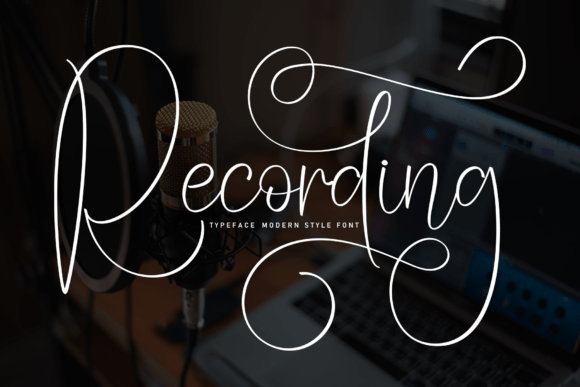
Recording is a modern script typeface with refined decorative flourishes that feel intentional, not overdone. It’s not fussy or fragile-looking; instead, it balances graceful curves with confident structure. The letterforms have just enough contrast and rhythm to read clearly at 14pt on a product tag — yet scale up effortlessly for a 24” farmhouse welcome sign or a luxury wedding suite. Its elegance isn’t borrowed from old-world calligraphy alone; it’s updated, legible, and built for real-world making.
Where Recording Shines in Physical & Digital Craft Projects
I reach for Recording when the project needs warmth, intention, and quiet sophistication — especially where customers associate visual tone with perceived value. Here’s how it works across my shop:
- Candle & soap labels: Paired with a clean sans serif (like Montserrat or Inter) for ingredients and warnings, Recording sets the mood on front labels — “Lavender & Sage,” “Coastal Rain,” or “Golden Hour” — without sacrificing scannability on small jars.
- Wedding stationery: It’s my go-to for names on save-the-dates, monograms on napkins, and “Mr. & Mrs.” on signage. Because Recording includes swashes and alternate characters, I can subtly vary the look across pieces while keeping brand consistency tight.
- Digital printables: Planner covers, quote pages, and printable wall art benefit from its balanced spacing and natural flow. Unlike some scripts that collapse into a blur at smaller sizes, Recording holds clarity down to 10pt in high-res PDFs — critical for downloadable planner kits.
- SVG & cut files: For Cricut and Silhouette users, Recording’s smooth vector outlines cut cleanly, even with delicate flourishes. I avoid using the most intricate swash variants on sub-½” stickers, but the standard glyphs render flawlessly on 1.5” product tags or 3” acrylic keychains.
- Seasonal packaging: From holiday mugs (“Merry & Bright”) to spring market tote bags (“Farm Fresh”), Recording adds seasonal charm without feeling dated. Its neutral-yet-luxurious tone works year-round — no forced “vintage” or “rustic” styling required.
Readability & Real-World Use Tips
Recording is designed as a display font — meaning it shines best in headlines, titles, short phrases, and branding elements. Don’t try to set full paragraphs or ingredient lists in it. But within its sweet spot? It delivers exceptional legibility. Letters like “a,” “e,” and “g” open clearly. Swashes are placed thoughtfully — they enhance, not obscure. When prepping files for print or cutting machines, I always test at actual size: zoom in at 200% in Illustrator, check stroke width consistency, and verify that flourishes won’t vanish during rasterization or vinyl weeding.
For small-format uses — think 1” round stickers or ⅞” hang tags — I stick to the base character set and skip extended swashes. On larger surfaces like wooden signs or fabric banners, I’ll layer in one or two decorative alternates to elevate focal words without overwhelming the eye.
Smart Pairings That Strengthen Your Brand
Recording thrives when paired intentionally. My most reliable combo? Recording + a warm, humanist sans serif. Think Poppins, Lato, or Manrope — fonts with friendly proportions and open counters that balance Recording’s expressive curves. This pairing works across labels, social media graphics, and web design for handmade shops. For more formal projects — say, apothecary branding or fine stationery — I’ll swap in a gentle serif like Cormorant Garamond or Playfair Display for body text, letting Recording anchor headlines and logos.
The Script Amp category tells me this font was crafted with commercial makers in mind — and it shows. Recording includes OpenType features like contextual alternates and standard ligatures, plus full multilingual support covering Western European languages. File formats typically include OTF, TTF, and WOFF — essential if you’re bundling fonts into Canva templates or SVG design kits for digital download buyers.
A Note on Licensing & Commercial Use
As a seller of physical products, printable templates, and SVG bundles, I double-check licensing before every launch. Recording is a commercial font — meaning you’re fully covered to use it in client work, sell items featuring its text (mugs, shirts, greeting cards), and include it in digital design assets you license or sell. Just be sure your license permits redistribution (e.g., embedding in editable Canva templates) if that’s part of your offering. Most reputable Script Amp fonts, including Recording, offer clear commercial terms — no hidden restrictions on quantity or platform.
What makes Recording stand out isn’t just its beauty — it’s how reliably it translates that elegance into functional, customer-facing craft. It helps your candle label feel curated, your wedding invite feel personal, and your Etsy thumbnail feel premium — all while staying rooted in what actually works on a cutting mat, a printer, or a mockup screen. In a world of fleeting trends, Recording feels timeless, intentional, and quietly confident — exactly the kind of typeface that builds trust, one handmade detail at a time.